
You are standing in your bedroom the night before a week-long trip, staring at an open suitcase and a pile of clothes that looks far too big for it. You want to travel light, skip the baggage carousel, and still have something decent to wear every day. A week in a carry-on is not a trick reserved for minimalists. It is a system, and once you learn it, you will wonder why you ever checked a bag for a short trip.
Start With a List, Not With the Bag
Most overpacking happens before anything goes into the bag. You pack for imaginary versions of the trip — the fancy dinner you probably will not attend, the cold snap that probably will not arrive, the three books you probably will not read. A list forces you to pack for the trip you actually booked.
Write down each day of the trip and what you will genuinely do that day: travel, sightseeing, a work meeting, a relaxed evening. Next to each day, write the outfit. When you can see that Tuesday and Thursday can share the same trousers with different tops, the pile shrinks on its own. Aim for outfits, not individual items, and cross off anything that only works with one other piece in the bag.
Build a Small Capsule That Mixes and Matches
For seven days, a workable capsule looks something like this: three to four tops, two bottoms, one extra layer such as a light jacket or cardigan, sleepwear, and the clothes you travel in. Choose a simple colour palette — for example, navy, white, and grey with one accent colour — so almost everything goes with everything else. Neutral bottoms are the backbone of the system, because nobody notices that you wore the same dark trousers twice, especially when the top changes.
Wear your bulkiest items on the plane: your heaviest shoes, your jacket, and your thickest jumper. That one decision can free up a surprising amount of space. Pack fabrics that resist wrinkles and dry quickly, and avoid anything that needs ironing or special care while you are away. If an item needs a belt, a special undershirt, or shoes you would otherwise not bring, leave it behind.
Laundry is your friend on a week-long trip. A small sink wash for a couple of tops midweek can stretch a four-top capsule across seven days, and most hotels offer a laundry service if you prefer.
Roll, Fold, or Bundle — Use the Right Method for Each Item
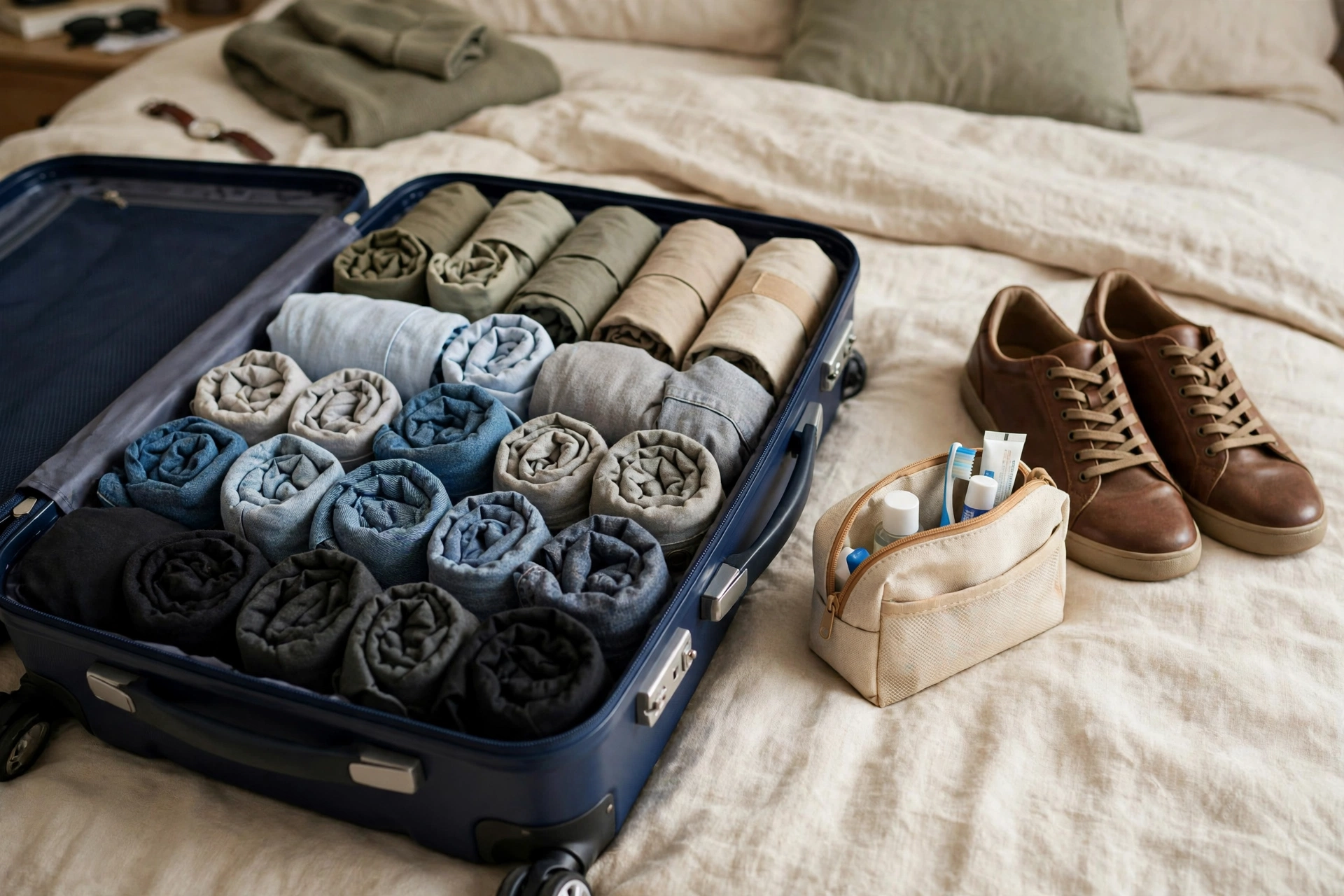
Rolling works best for soft, casual clothes such as T-shirts, knitwear, and casual trousers: rolled items fill the corners of a suitcase neatly and make it easy to see everything at a glance. Fold structured items, such as shirts and blazers, instead, because rolling can crease collars and sharp lines.
Packing cubes are not essential, but they earn their place on a week-long trip: one for tops, one for bottoms, and a small one for underwear and socks. They keep categories separate and make unpacking a two-minute job.
Toiletries and the Liquids Rule
Toiletries take up more space than most travellers expect, and they cause more security delays than anything else in a carry-on. Keep them in one clear, quart-sized bag at the top of your suitcase so you can pull it out quickly at security. Under the widely used 3-1-1 rule for carry-on luggage, each liquid container must hold 3.4 ounces (100 millilitres) or less, all containers must fit in one quart-sized bag, and each passenger gets one bag. If you are unsure whether an item counts as a liquid, assume it does — gels, creams, and pastes are treated the same way.
Decant rather than carrying full-sized bottles. A week of shampoo, face wash, and moisturiser fits easily in small travel bottles, and most hotels provide basic toiletries if you run short. Solid alternatives save even more space: a solid shampoo bar, a stick deodorant, and a bar of soap do not count against your liquids bag at all. Keep medication in its original packaging in your personal item, not buried in the suitcase, and check the rules of your destination and airline before you fly, since security rules can vary by country and airport.
Shoes, Tech, and What Goes Where
Limit yourself to two pairs of shoes: the pair you wear on the plane and one more pair in the bag. Shoes are the heaviest, bulkiest items in any suitcase, so this single limit often makes the difference between a carry-on that closes easily and one you have to sit on. Stuff socks and small items inside packed shoes to use the empty space, and put shoes in a bag or shower cap so they do not mark your clothes.
Place heavy items, such as shoes and toiletry bags, near the wheels at the bottom of the suitcase so the bag stays stable when upright. Keep your laptop, chargers, and documents in your personal item or the top pocket of the suitcase, where you can reach them without unpacking. Remember to check your airline’s carry-on size and weight limits before you leave, because budget airlines in particular can be stricter than the standard size many travellers assume.
Pack for the Climate You Are Actually Visiting
A week-long packing list only works if it matches the weather at your destination. Check the forecast a day or two before you leave, not a month ahead, and adjust one layer up or down rather than packing for every possible season.
If your trip leans warm, you can pack lighter fabrics and fewer layers — for example, if you are heading to one of the warmest places to visit in Europe during winter, a light jacket and layers will serve you better than a heavy winter coat.
Keep Airport Essentials Within Reach
On travel day, your passport or ID, phone, wallet, medication, a snack, and something to read or listen to should all live in your personal item, never in the suitcase in the overhead bin. Keep your liquids bag near the top of the carry-on so security screening is quick.
If you ever need extra help at a busy airport, it is worth knowing what support is available before you arrive — for instance, the Travelers Aid Dulles guide to airport assistance explains the kind of help travellers can ask for at a large hub. Knowing where to go for directions, flight updates, or special assistance means you spend less time worrying and more time getting to your gate.
A Simple Packing Checklist for a Week
- 3–4 tops that all match your 2 bottoms
- 1 extra layer: a light jacket, cardigan, or jumper
- Sleepwear and underwear for the week, plus a laundry bag
- 2 pairs of shoes in total, including the pair you wear
- One quart-sized liquids bag with travel-sized toiletries
- Chargers, adaptor, power bank, and travel documents in your personal item
- Medication, a snack, and a reusable water bottle (filled after security)
FAQ
Can you really pack for a week in just a carry-on? Yes, for most trips in mild weather. The system is a small mix-and-match capsule, two pairs of shoes, travel-sized toiletries, and one midweek wash if needed. Very cold weather or formal events that need bulky outfits are the main exceptions.
Should you roll or fold your clothes? Roll soft, casual clothes and fold structured ones such as shirts. Packing cubes help either way, because they keep categories separate and make the bag easier to unpack.
What if your carry-on is overweight at the gate? Wear your heaviest jacket and shoes, move your laptop and power bank to your personal item if the airline allows it, and leave behind anything you can buy cheaply at your destination.
Final Thoughts
Packing a carry-on for a week-long trip is less about owning special gear and more about making honest choices before you zip the bag. Plan outfits instead of packing items, build a small capsule that mixes and matches, keep toiletries tight, and put airport essentials where you can reach them. Do that, and you will walk past the baggage carousel with a bag that holds everything you need — and nothing you do not.