You step off the train in a city you have never visited, bag on your shoulder, phone in your hand, trying to read a street sign in a language you only half recognise. Within a minute, a stranger offers to help you find your hotel and a driver waves you toward an unbooked taxi. Tourists usually lose money not in a confrontation, but in a small interaction that moves too fast to think through. Learning how to avoid tourist scams in a new city is less about suspicion and more about slowing those moments down.

Learn the Patterns, Not Just a List of Tricks
Scams change from city to city, but the patterns behind them stay similar. Once you recognise the pattern, you can spot a new variation of it even if you have never heard of that exact trick. Most tourist scams rely on one of five levers: distraction, false friendship, false authority, urgency, or a deal that is too good to be true.
Distraction is the simplest: someone spills something on you or drops a map at your feet while someone else reaches for your bag. False friendship is slower: a stranger invites you for a drink, and the bill arrives later. False authority is a person claiming to be a police officer or ticket inspector, asking to see your wallet. Urgency pushes you to decide before you can check anything. And the too-good deal — a taxi at half price, a designer bag for almost nothing — usually means the real price is hidden somewhere else. Pause before you hand over money or follow someone somewhere — a genuine helper will not mind.
Do Ten Minutes of Research Before You Arrive
The cheapest protection is ten minutes of reading before you land: search your destination plus “common tourist scams” to learn which tricks are active in that city right now. Local detail matters more than a generic warning list.
For official safety information, check your own government’s travel advice — for US travellers, the US State Department’s advisories at travel.state.gov. Ask your hotel, too: what should a taxi cost, which areas should you avoid after dark, and is any scam circulating? Safety varies greatly by destination, as the guide to what places in Africa are safe to visit shows.
Taxis, Rides, and Getting Around
Transport is where many visitors first lose money, because you are tired and just want to reach your hotel. Before getting into any vehicle, agree on the price or confirm the meter will run; if a driver refuses the meter, find another car. At airports and stations, use the official taxi rank or a ride-hailing app, not someone who approaches you inside the terminal.
Check the route on your own phone, and count your change before leaving the vehicle. Keep small notes for fares so you are not handed back wrong change in a hurry.
Money, Cards, and ATMs
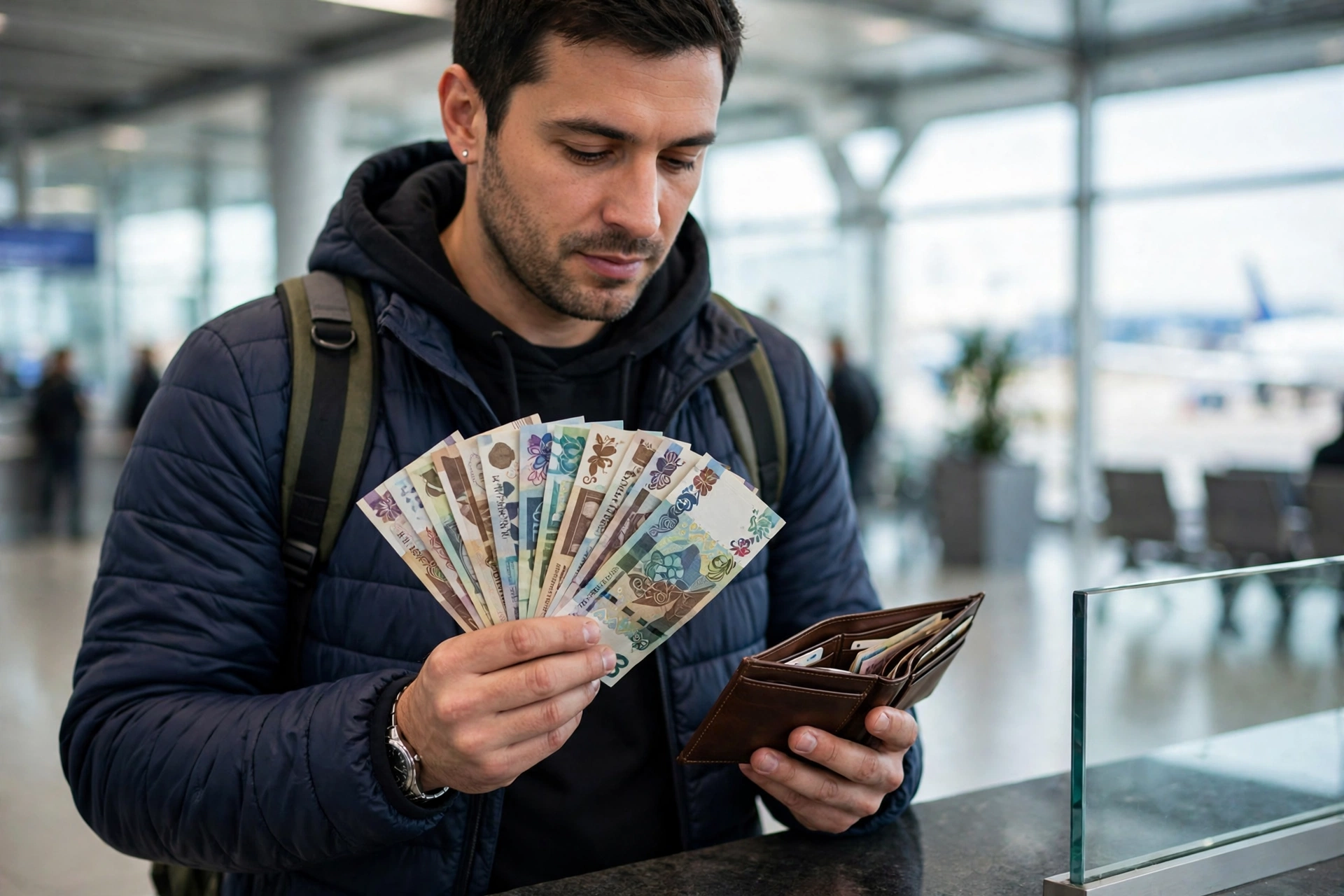
Carry less cash than you think you need for a day out, split between places: a day’s spending money in your wallet, the rest secured elsewhere. Use ATMs inside banks or busy, well-lit locations, cover the keypad when entering your PIN, and refuse “help” from strangers at the machine.
When paying by card, keep it in sight and check the amount before you tap or sign. If a terminal offers a different currency, ask what the conversion means first; paying in the local currency is usually clearer. Keep your bank’s card-freeze option on your phone.
Keep Your Valuables Boring
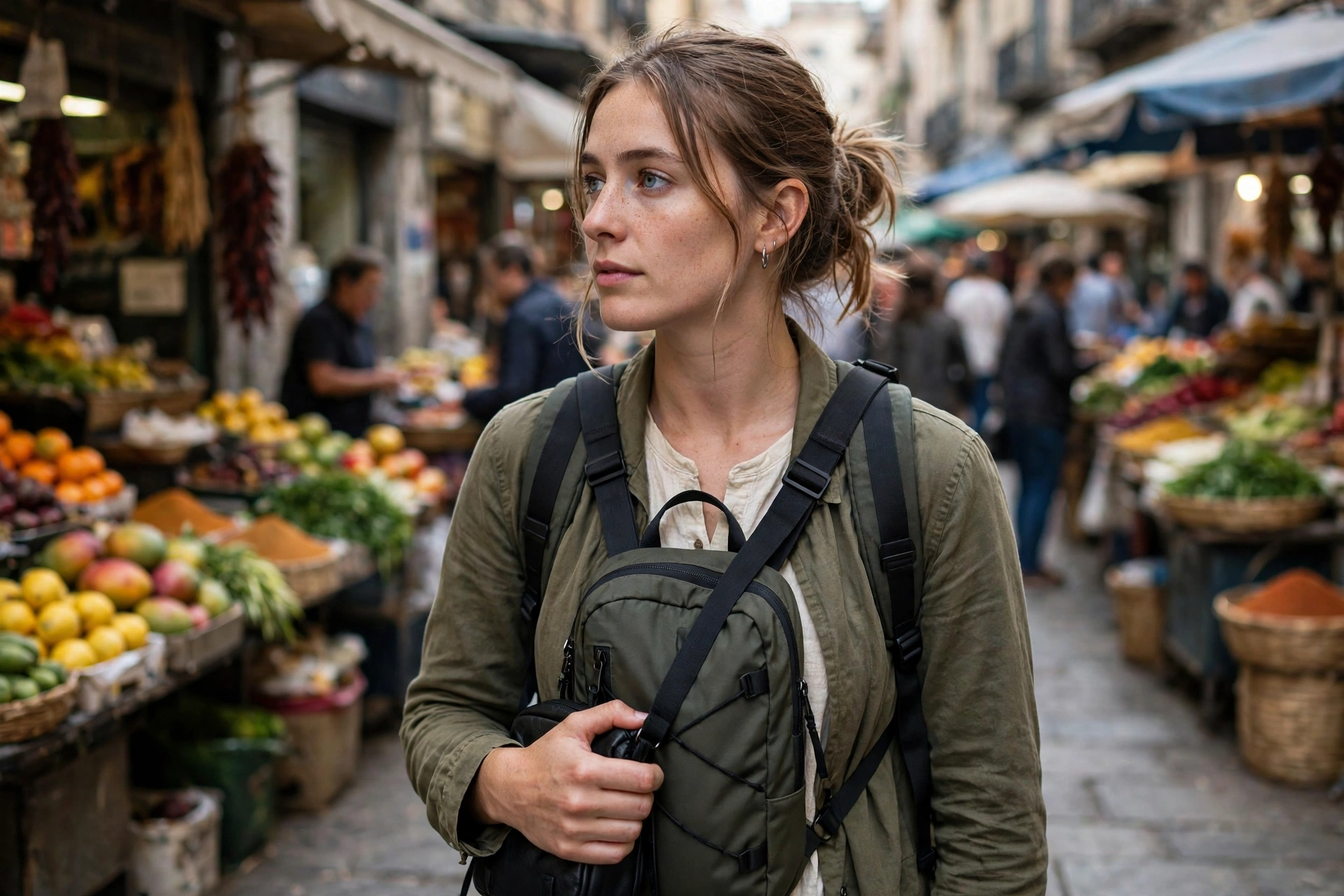
Pickpockets look for easy targets. A crossbody bag worn in front of you, a zipped inner pocket for passport and cards, and nothing valuable in a back pocket remove most of the opportunity. Leave jewellery and unneeded documents in the hotel safe, and carry a passport photo on your phone plus a separate paper copy instead of the original, unless you need it that day.
The guide to how to pack a carry-on for a week-long trip applies the same idea: essentials within reach, everything else packed away. For a day out, that means ID, phone, one card, and a little cash — nothing you would hate to lose in an outside pocket.
Restaurants, Shops, and Tours: Check the Price First
Overcharging rarely looks like a scam: a menu without prices, a “special” dish you did not order, or a tour adding shopping stops. The fix is the same: see the price before you agree — menu prices, item prices before serving, and a tour’s full route and total cost, including entrance fees, before it starts.
Be polite but firm about extras: send back anything you did not order before using it, and leave any shop that will not give a price. Book tours through your hotel, a visitor centre, or a platform with clear terms and real reviews — not a stranger at a landmark.
Watch Out for Online Booking Traps Too
Not every scam happens on the street: fake listing sites and ads for impossibly cheap rooms can take your payment before you arrive. Book through the hotel’s own site, a well-known platform, or a contactable agent, and distrust any deal asking for bank transfer or gift-card payment. If a message claims your booking is cancelled and urges an immediate click, ignore the link and check the booking site directly.
If Someone Targets You, Slow the Moment Down
If you realise you are in a scam, leave rather than trying to win the argument: say no, walk to a busy, well-lit place, and never follow anyone down a side street to “sort it out.” You owe no stranger an explanation, tip, or purchase. If someone turns aggressive, give up the item or money rather than risking injury.
Afterwards, report it to local police if you feel safe doing so, plus your hotel and bank. Freeze affected cards, change exposed passwords, and keep the police report number for insurance.
FAQ
What should I do if I have already been scammed? Stop further payments first: freeze the card, contact your bank, and change any exposed passwords. Then report it to local police and your hotel, and keep receipts, messages, and the report number for an insurance claim. Do not go back to confront the person on your own.
Is it safe to accept help from strangers in a new city? Often, yes — but accept help that costs you nothing and moves you nowhere you did not plan to go, such as directions on a public street. Be cautious when help involves handling your bags, following someone to a shop or ATM, or paying for something you did not ask for.
Should I carry cash or only cards? Carry both, in small amounts. Cards are safer for larger payments and easier to freeze, but small cash is useful for markets, tips, and places that do not take cards. Split them between pockets or bags so losing one does not leave you with nothing.
Final Thoughts
Avoiding tourist scams is not about distrusting everyone you meet. It is about habits that give you time to think: research before you arrive, agree prices before you commit, keep valuables boring and close, and walk away from anything that pressures a hurried decision. Most of your trip will be kind strangers and fair transactions — these habits keep the few bad encounters small and forgettable.