
You bring home a bright bunch of cilantro on Saturday, full of plans for tacos and salads. By Thursday, it is a limp, dark tangle at the bottom of the crisper drawer, and half of it goes straight into the bin. If that scene feels familiar, the problem is not your cooking — it is your storage. Fresh herbs are living plant cuttings, and they keep losing water from the moment they are picked. This guide shows you how to store fresh herbs so they last longer, with a different method for tender herbs and woody herbs, plus what to do when you have more than you can use in a week.
Why Fresh Herbs Wilt So Fast
A cut herb is still drinking and breathing. Its stems keep pulling water upward, while its leaves keep losing moisture to the air. In an open fridge drawer, that balance tips fast: the cold, dry air pulls moisture out of the leaves, and the stems have no water to replace it. The result is wilting, then browning, then sliminess as damaged cells break down. The fix is simple once you see it — give the stems water, or slow the moisture loss from the leaves. Which one you choose depends on the kind of herb you are holding.
First, Sort Your Herbs: Tender or Woody?
Every fresh herb falls into one of two groups, and the groups need opposite treatment. Tender herbs have soft stems and delicate leaves: basil, cilantro, parsley, dill, mint and chives. They hold a lot of water, bruise easily, and wilt within days if they dry out. Woody herbs have tough, fibrous stems and firmer leaves: rosemary, thyme, oregano, sage and marjoram. They hold less water and are far more forgiving, but trapped moisture makes them mouldy. Sorting the bunch before you store it takes thirty seconds and is the single most useful step in this whole guide — a mixed bunch stored one way guarantees half of it fails.
How to Store Tender Herbs in Water
Treat tender herbs like a bouquet of cut flowers. Trim about a centimetre off the bottom of the stems with sharp scissors, then stand the bunch upright in a jar or glass with three to five centimetres of cool water — just enough to cover the cut ends, with every leaf kept above the waterline. Leaves sitting underwater rot, and the rot spreads stem by stem. Change the water every two to three days, or sooner if it turns cloudy, and snip off any stem end that looks slimy. Loosely cover the jar with a plastic produce bag to hold in humidity, and keep it in the refrigerator. Stored this way, cilantro, parsley, dill and mint commonly last one to two weeks instead of wilting in three or four days loose in a bag. The one herb that breaks this rule is basil, covered next.
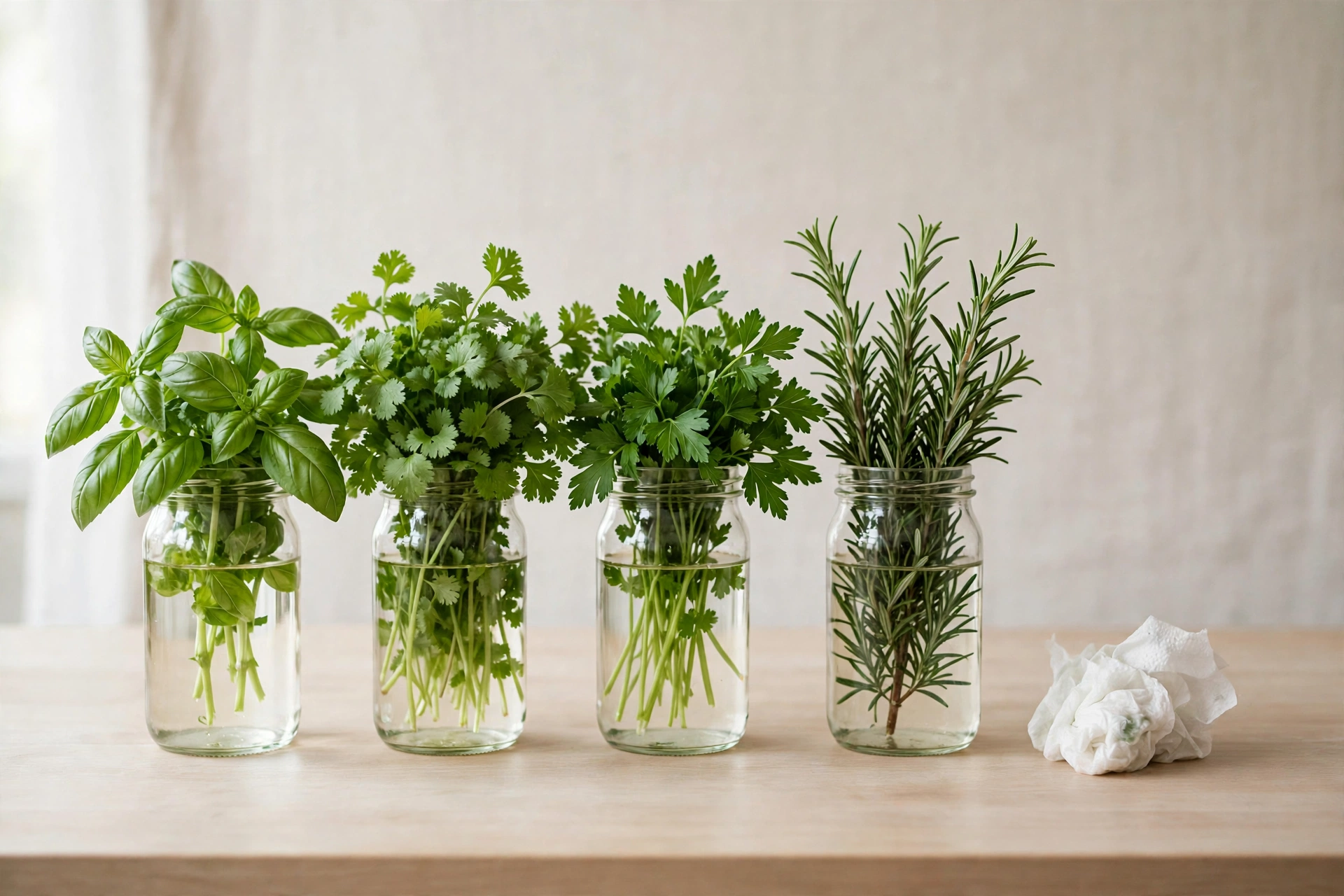
Basil Is the Exception: Keep It on the Counter
Basil looks like the other tender herbs, but cold is its enemy. Refrigerated basil turns black, sometimes overnight, because its leaves are sensitive to chilling. Keep your basil bouquet on the kitchen counter instead, in the same jar of water, loosely covered with a bag and out of direct sunlight. Change the water every couple of days, and it should stay bright and usable for about a week to ten days. If your kitchen is very warm, pick a cooler spot away from the stove, but never put basil in the fridge.
How to Store Woody Herbs in a Damp Paper Towel
Woody herbs do not need a jar of water — they need steady, light moisture and airflow. Lay the sprigs on a paper towel that you have dampened and wrung out well; it should feel barely wet, not dripping. Roll the towel loosely around the herbs, place the roll in a resealable bag or airtight container, and leave the bag slightly open or squeeze out most of the air before sealing. Store it in the crisper drawer. Check the towel every few days and refresh it if it has dried out. Rosemary, thyme, oregano and sage stored this way commonly last two to three weeks, sometimes longer. If you see dark, damp spots or a musty smell, the towel was too wet — unwrap the herbs, dry them gently, and re-wrap them in a drier towel.
Should You Wash Herbs Before Storing Them?
As a rule, no. Extra moisture on the leaves speeds up spoilage, so wash only what you plan to use right away. If a bunch is visibly gritty, give it a gentle rinse in cool water, then dry it thoroughly — lay it in a single layer on paper towels and blot the leaves, or shake off the excess water and let it air-dry before storing. Do not use a salad spinner on tender leaves; the spinning bruises them and the bruised spots turn dark first. When you are ready to cook, wash the herbs under cool running water and pat them dry. For guidance on the method in general, the storage guide from The Kitchn follows the same tender-versus-woody split and is worth a read if you want a second opinion.
How Long Each Method Lasts
Storage times vary with the freshness of the bunch and the temperature of your fridge, but these ranges are a realistic guide:
- Tender herbs in water, refrigerated: cilantro, parsley, dill and mint — about one to two weeks.
- Basil in water, on the counter: about seven to ten days.
- Woody herbs in a damp towel, refrigerated: rosemary, thyme, oregano and sage — about two to three weeks, sometimes more.
- Herbs loose in the crisper drawer: only a few days, whichever kind they are — this is the method that wastes the most herbs.
If a bunch was already limp when you bought it, expect the shorter end of each range. A quick trim of the stem ends and an hour standing in water can perk up mildly wilted tender herbs before you store them.
When You Have Too Much: Freeze Your Herbs
Sometimes the garden — or a generous market bunch — gives you more herbs than a week of cooking can use. Freezing is the best rescue, and it works for both groups. Chop the leaves, pack them loosely into an ice cube tray, and top each cube with water or olive oil before freezing. Once solid, move the cubes into a labelled freezer bag. Frozen herb cubes keep for several months and drop straight into soups, stews, sauces and sautés — no thawing needed. They lose their crisp texture, so do not use them as a garnish, but their flavour holds up well in cooked dishes. Tender herbs freeze better in oil, which protects their flavour; woody herbs freeze fine in either.
Drying Woody Herbs for the Pantry
Woody herbs dry far better than tender ones, and drying is the simplest long-term option for rosemary, thyme, oregano and sage. Tie small bundles of stems together, hang them upside down in a dry spot out of direct light, and leave them until the leaves crumble between your fingers rather than bending — usually one to two weeks. Strip the leaves into a clean jar, label it, and keep it in a cool, dark cupboard. Dried herbs keep their flavour for months, and one teaspoon of dried herb roughly replaces a tablespoon of fresh in a recipe. Tender herbs like basil and cilantro lose too much flavour when dried, so freeze those instead.
Signs It Is Time to Throw Herbs Away
Even the best storage has a limit. Toss the bunch when the leaves turn slimy or develop dark, wet patches, when the stems feel soft and mushy instead of firm, or when the water in the jar smells sour. A few yellowed leaves can simply be picked off; a bunch that smells musty or rotten belongs in the bin. When in doubt, trust your nose — fresh herbs should smell like themselves, only fainter, never sour or musty.
FAQ:
Can I store different herbs together in one jar?
Yes, if they are the same type — several tender herbs can share a jar of water, and several woody herbs can share a damp towel. Do not mix tender and woody herbs in the same container, because they need different moisture levels.
Why did my cilantro turn slimy in the fridge?
Usually one of three causes: leaves were sitting in the water, the water was not changed and turned murky, or the bunch was washed before storing. Trim the slimy stems, change the water, and keep all leaves above the rim.
Can I store herbs in olive oil in the fridge instead of freezing them?
Chopped herbs covered in oil keep for a week or two refrigerated and are handy for cooking, but for safety they should be used quickly and never left at room temperature. Freezing the same oil-and-herb cubes is the safer long-term option.
Do herb keepers or special containers work better than a jar?
A purpose-made herb keeper does the same job as a jar with a loose bag over it — it holds water for the stems and limits airflow. It can be tidier in a crowded fridge, but it is not necessary; the jar method gives the same results for free.
Final Thoughts
Storing fresh herbs is less about buying special equipment and more about matching the method to the herb. Tender herbs want to stand in water like flowers, basil wants the same jar on the counter instead of the fridge, and woody herbs want a barely damp towel and a little airflow. Pick the right method, change the water or refresh the towel every few days, and a bunch that used to wilt by Thursday can still be cooking for you two or three weeks after you bought it. And once your herbs are actually lasting, you will use them — if you need ideas for putting a full bunch to work, these food recipes are a good place to start.