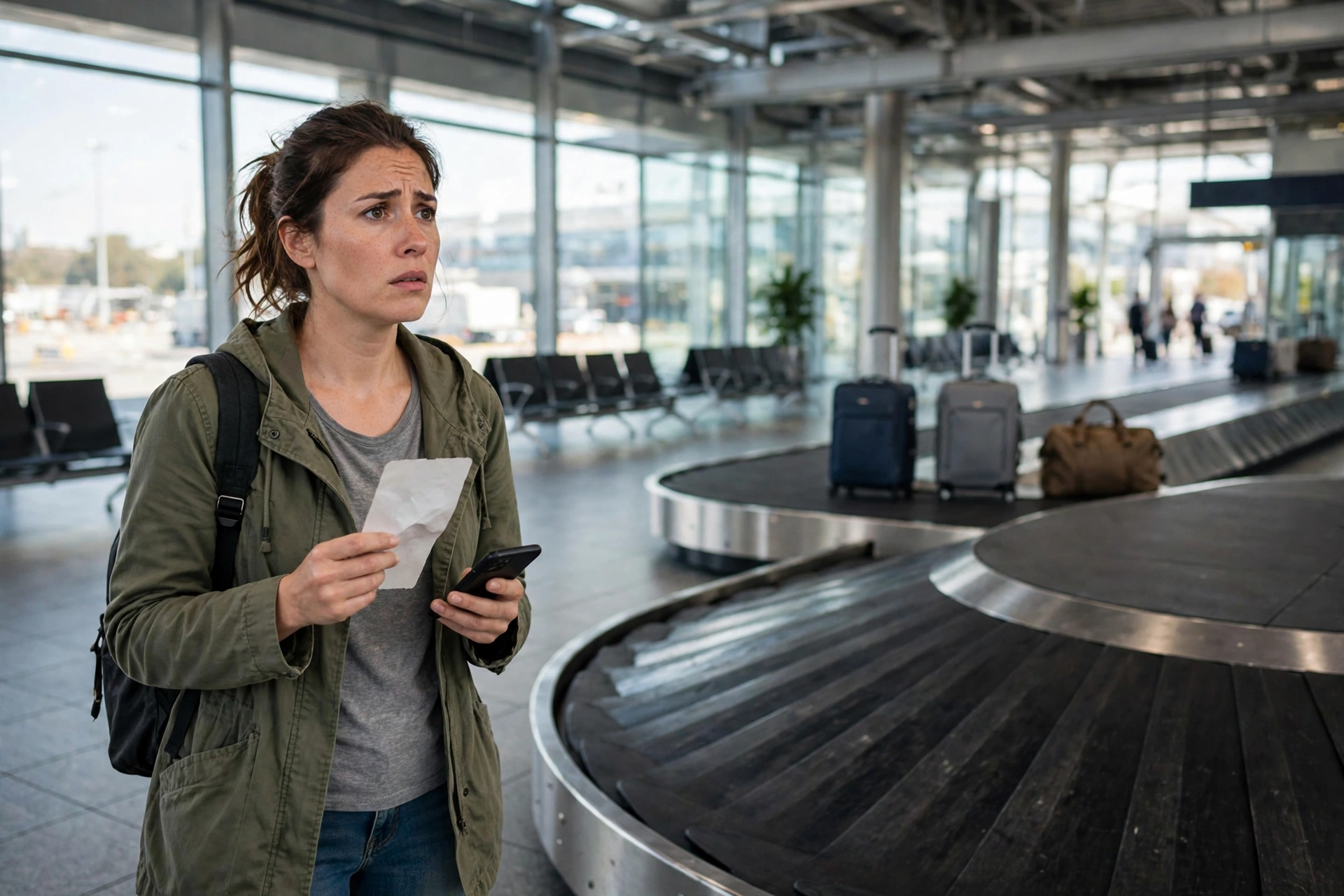
Picture this: you are standing at the airport with your boarding pass in one hand and your dog’s carrier in the other, wondering whether you have forgotten something important. Flying with a dog is not as simple as booking an extra seat, but it is far from impossible. With the right carrier, the right paperwork, and a little preparation, your dog can travel safely beside you in the cabin. This guide walks you through every step, from checking whether your dog qualifies for the cabin to getting through security, so you both board with confidence.
Can Your Dog Fly in the Cabin?
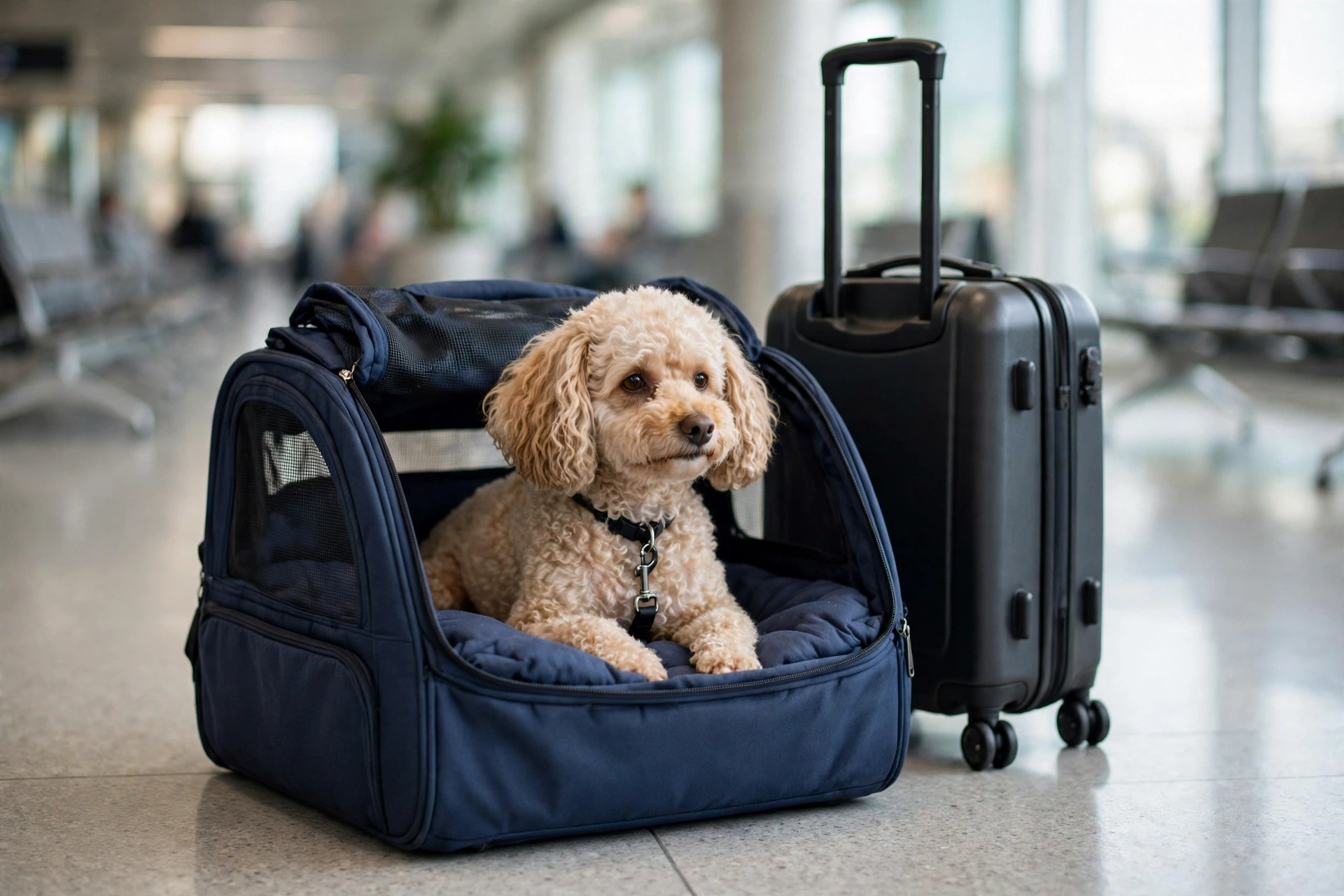
Most airlines only allow small dogs in the cabin. Your dog must travel in a carrier that fits completely under the seat in front of you, and most airlines set a combined weight limit of around 20 pounds (9 kg) for the dog plus the carrier. Your dog must also be able to stand up, turn around, and lie down comfortably inside the carrier. Puppies usually need to be at least 8 weeks old to fly on domestic routes, and dogs entering the United States must be at least 6 months old under the CDC’s import rules.
Flat-faced breeds such as bulldogs, pugs, and French bulldogs need extra care. These brachycephalic dogs are more vulnerable to breathing problems at altitude, and many airlines restrict them from cargo holds entirely. If your dog is a flat-faced breed, talk to your vet before you book anything, and expect the cabin to be your only realistic option.
Choose a Carrier Your Dog Can Actually Travel In
A soft-sided carrier is the usual choice for cabin travel because it flexes to fit under seats of different sizes. Look for one that is well ventilated on at least three sides, has a leak-proof bottom, and closes with secure, escape-proof zippers. A common size guide is around 18 x 11 x 11 inches, but the exact maximum varies by airline and even by aircraft, so always check your airline’s published dimensions before you buy.
Do not let travel day be the first time your dog meets the carrier. Start at least two weeks ahead: leave the carrier open at home with a familiar blanket inside, feed treats near it, then inside it, and build up to short sessions with the door closed. A dog that already sees the carrier as a safe den will settle far more easily on the plane. Remember that the carrier usually counts as your carry-on item on most airlines, so plan your other luggage around it — packing a carry-on for a week-long trip without a second bag takes some discipline, but it keeps boarding simple.
Book Early and Reserve Your Dog’s Spot
Airlines strictly limit how many pets can fly in the cabin, typically between four and eight per flight. A free seat on your flight does not mean a free pet spot, so add your dog to the reservation as soon as you book — online where the airline allows it, or by phone right after booking. If the cabin pet spots are already full, you will need a different flight, so check this before you pay for a non-refundable ticket.
Expect to pay a pet fee each way. As of late 2026, most major US carriers charge around $100 to $150 per pet each way in the cabin — Alaska Airlines charges $100, Southwest charges $125, and Delta, American, United, and JetBlue charge around $150. International routes usually cost more. Fees change, so confirm the current amount on your airline’s official pet page before you book.
Whenever you can, choose a direct flight. Every connection is another takeoff, another landing, and another chance for a delay — and a long wait between flights is hard on a dog in a carrier. If a long connection is unavoidable, look up the airport’s pet relief areas in advance and read what to do on a layover longer than 8 hours so you have a plan for the wait.
Get the Paperwork Sorted Before Travel Day
Paperwork is where most dog-travel plans go wrong, because three different authorities can each demand something: the airline, the destination country, and the country you are entering. Sort it out in this order:
- Vet visit: Book a check-up a few weeks before travel. Make sure vaccinations are current, especially rabies, and ask your vet for a copy of your dog’s vaccination record to carry with you.
- Health certificate: Many airlines require a health certificate issued within 10 days of travel, particularly for cargo and international flights. Some domestic cabin flights do not require one, but check your airline’s rules rather than assuming.
- International travel: For trips abroad, the certificate usually must come from a USDA-accredited veterinarian and be endorsed by USDA APHIS (the standard form is APHIS Form 7001). Note that some countries, including the United Kingdom and Australia, do not allow pets to arrive in the cabin at all — they must travel as cargo.
- Entering the United States: Under CDC rules in effect since August 1, 2024, every dog entering the US must be at least 6 months old, microchipped with a chip readable by a universal scanner, appear healthy on arrival, and have a CDC Dog Import Form receipt. The form is free and completed online, and the receipt is emailed to you. Dogs that have spent time in a high-risk rabies country in the previous six months face additional requirements, so check the CDC’s dog import pages well before you fly.
- European Union: Dogs travelling into the EU generally need an EU pet passport or an EU animal health certificate, a microchip, and a valid rabies vaccination.
Keep every document — vaccination record, health certificate, CDC receipt — printed and on your phone. Airlines and border officers can ask for them at check-in, at the gate, or on arrival.
Prepare Your Dog for the Flight
A calm flight starts days before departure. Exercise your dog well on travel day so they are tired and ready to rest. Feed a light meal three to four hours before the flight, not right before boarding, and offer water in moderation so the carrier stays dry. Pack a small dog travel kit in your personal item: a little food, a collapsible bowl, a leash, waste bags, an absorbent pad for the carrier, your dog’s vet records, and one familiar comfort item such as a blanket that smells like home.
Do not sedate your dog for a flight unless your vet specifically advises it. Sedation is generally not recommended for air travel because it can affect breathing and body temperature at altitude, and a groggy dog cannot balance or reposition itself during turbulence. If your dog is very anxious, ask your vet about safer calming options well before travel day.
At the Airport and on the Plane
Arrive earlier than you would travelling alone — most airlines require you to check in at the counter when travelling with a pet, and the pet fee is usually paid there. At the security checkpoint, you will take your dog out of the carrier and carry them, or walk them on a leash, through the metal detector while the empty carrier goes through the X-ray machine. Your dog never goes through the X-ray machine. Use the airport’s pet relief area before boarding so your dog is comfortable for the flight.
Once on board, slide the carrier under the seat in front of you and leave your dog inside it for the whole flight. Do not open the carrier mid-flight to let your dog out — it is against airline rules, and a loose dog in a cabin is a safety problem for everyone. Speak to your dog calmly if they whine, and keep the carrier’s ventilation panels clear. Most dogs settle within minutes once the cabin quiets down.
What If Your Dog Is Too Big for the Cabin?
If your dog cannot fit comfortably in an under-seat carrier, the cabin is not an option — and cargo is not the easy substitute it sounds like. Several major US carriers no longer accept checked pets from the general public, and cargo travel is subject to temperature embargoes in hot summers and cold winters. Flat-faced breeds are often barred from cargo entirely.
For a larger dog, weigh the alternatives honestly: driving may be slower but far less stressful for the animal; a specialist pet transport service can handle the logistics of a long move; and for a short holiday, a trusted boarder or house sitter may simply be the kinder choice. A flight your dog cannot take comfortably is not worth forcing.
FAQ:
Can my dog sit on my lap during the flight?
No. Pet dogs must stay in their carrier under the seat for the entire flight. Only trained service dogs are allowed out of a carrier in the cabin.
How much does it cost to fly with a dog?
In the cabin on a major US carrier, expect roughly $100 to $150 each way, with international routes costing more. Cargo, where offered, is usually priced separately and can cost several hundred dollars.
Do emotional support animals fly for free?
No. US airlines no longer recognise emotional support animals — they travel as pets, with the normal fee and carrier rules. Trained service dogs, including psychiatric service dogs, still fly free in the cabin.
Can a puppy fly on a plane?
Most airlines accept puppies from 8 weeks old on domestic flights, but a dog must be at least 6 months old to enter the United States under CDC rules.
What happens if my flight is delayed?
Tell the gate agent you are travelling with a pet in the cabin. Ask about pet relief areas in the terminal, offer your dog water, and keep them in the carrier — a delay is stressful enough without adding an unfamiliar terminal to it.
Final Thoughts
Flying with a dog is mostly a planning exercise, not a gamble. Check the size and weight limits before you buy a carrier, reserve your dog’s cabin spot the moment you book, get the health paperwork done early, and give your dog time to get comfortable with the carrier at home. Do those four things and the flight itself becomes the easy part — a few hours in a familiar den under your seat, and then you are both on holiday together.