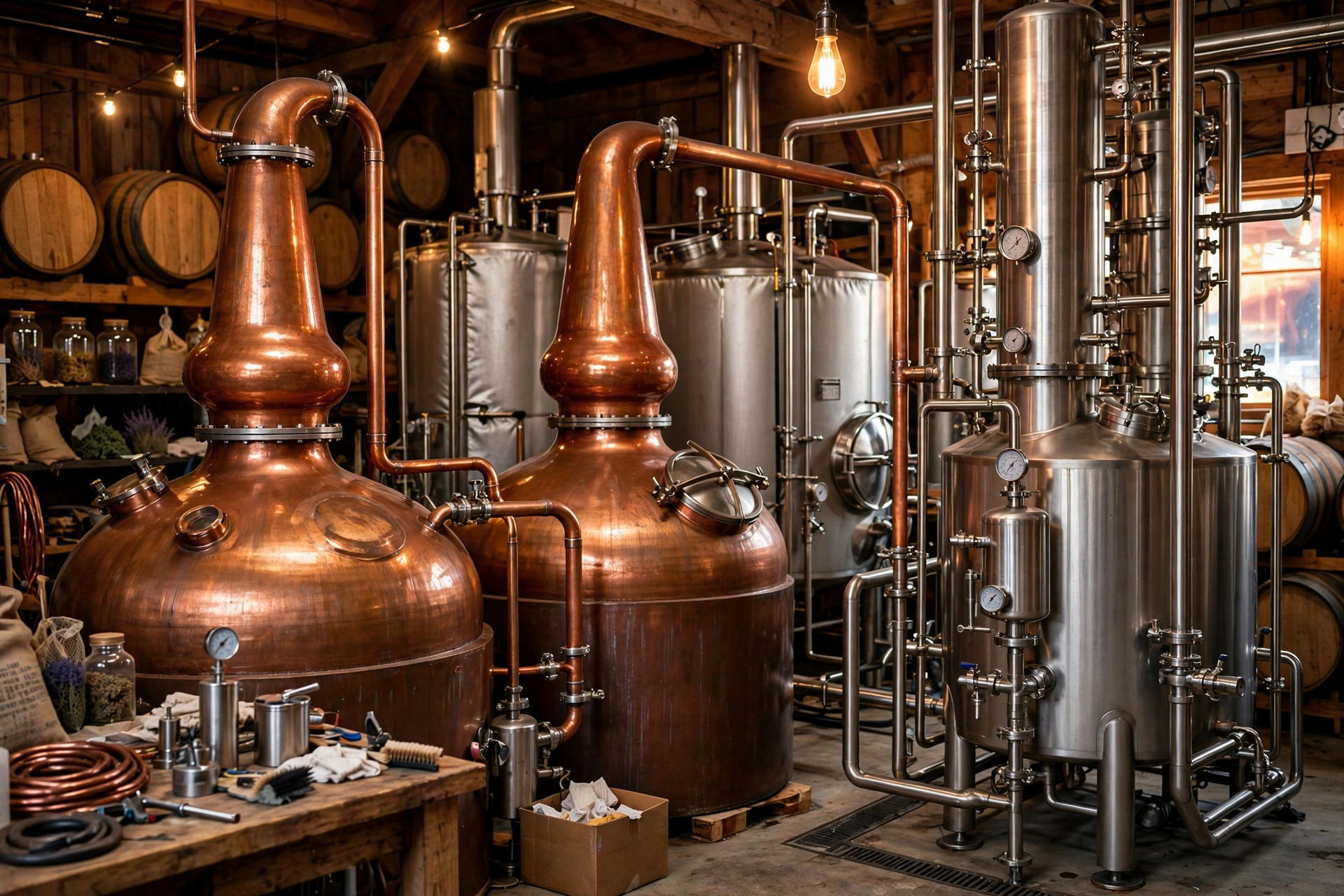
Walk into a craft distillery and the first thing you notice is the still: copper gleaming, vapour rising, the air warm with the smell of fermenting grain or fruit. The still is the heart of the operation, and the company that built it shapes everything that comes out of it. Kothe Destillationstechnik, a German manufacturer based in Eislingen, has built distillation equipment for decades, and its systems now run in distilleries around the world. This guide explains who Kothe is, how its equipment works, and what a distiller should check before investing in it.
Who Kothe Is
Kothe Destillationstechnik GmbH is a German company that develops and manufactures distillation systems ranging from 50 to 5,000 litres. The equipment is used to produce premium distillates from fruit as well as whisky, rum, gin and other spirits. The company’s systems are based on patented designs developed from decades of experience with professional spirits producers, combined with local craftsmanship, and customers of Kothe equipment have won international awards for the spirits they produce.
A well-known example is Koval Distillery in Chicago, which runs a 5,000-litre Kothe pot still with two columns, along with a Kothe mash tun and fermentation tanks, and which also acts as the US representative for Kothe equipment. That kind of adoption by a working distillery tells you more about the equipment than any brochure: it is built for producers who need consistent results at real production volumes, not for display.
How the Equipment Works
Distillation separates alcohol from a fermented liquid by heating it so the alcohol evaporates first, then condensing the vapour back into liquid. The quality of the spirit depends on how precisely that process is controlled. Kothe systems are built around that control: temperature, reflux and vapour flow are managed so the distiller can separate the desirable flavours from the parts that should be discarded, and repeat the result batch after batch.
The practical features follow from that. Pot stills and columns are available for different styles of spirit, with copper used where it helps refine flavour and stainless steel where durability and easy cleaning matter. Control systems let operators monitor temperature, pressure and alcohol content, and adjust the run as it progresses. Heat recovery and efficient thermal design reduce the energy each batch needs, which matters both for running costs and for the environmental footprint of the distillery.
What the Systems Are Built For
The 50 to 5,000 litre range covers a wide spread of producers. At the small end are craft distilleries and fruit growers making eau-de-vie and brandy in modest batches, where a small still and careful control matter more than volume. At the large end are established producers running thousands of litres, where consistency across batches and reliable throughput are the priority. The same design principles apply at both scales: precise control, repeatable results, and equipment that can be cleaned and maintained without shutting the distillery down for days.
Fruit distillates are the company’s historic strength, reflecting the German tradition of orchard brandy, but the same equipment serves whisky, rum and gin producers, whose needs differ mainly in the details: grain mashing and fermentation for whisky, molasses handling for rum, and botanical baskets or vapour infusion for gin. A buyer should confirm that the specific configuration suits the spirit they plan to make, because a still built for fruit brandy and one built for whisky are not interchangeable without the right setup.
Before You Buy
Buying distillation equipment is a long-term decision, so check the practical points before the price. Confirm the capacity you actually need, including headroom for growth, and the space, power, water and ventilation the system requires. Ask about installation, training and spare parts, and how quickly support can reach you when something breaks during a production run. Ask for references from distilleries running the same system at a similar scale, and speak to them about reliability and running costs.
Two other points deserve attention. First, distilling is a licensed activity almost everywhere: you need the right permits before you buy equipment, and the licensing rules vary by country and region, so sort the legal side out first. Second, check the company’s current trading status directly before placing an order. In December 2025, Kothe Destillationstechnik entered provisional insolvency proceedings in Germany, with the appointed administrator stating that the business would continue to operate without restriction. That is a matter of public record, and a buyer should confirm the current position, including warranty and parts support, rather than assume it. Industrial equipment is a long commitment, and the supplier’s stability is part of the purchase, as it is for any industrial plant, such as the operations covered in our look at Trane Technologies in Newberry, SC.
Frequently Asked Questions
What does Kothe Destillationstechnik make?
Distillation systems from 50 to 5,000 litres for producing premium spirits: fruit distillates, whisky, rum, gin and other alcoholic beverages, based on patented designs.
Where is Kothe based?
In Eislingen, Germany. Its equipment is used by distilleries in many countries, including Koval Distillery in Chicago, which also represents Kothe in the United States.
What size of still do I need?
It depends on your production volume, the spirit you make, and your growth plans. Small craft producers often start at the lower end of the range, while established distilleries use the larger systems. Discuss your actual batch sizes with the supplier before choosing.
Do I need a licence to distil?
Yes, in almost every country. Distilling alcohol requires permits, and the rules vary by location. Arrange licensing before buying equipment, not after.
Is Kothe still in business?
The company entered provisional insolvency proceedings in Germany in December 2025, with the administrator stating operations would continue. Confirm the current trading status, warranty and parts support directly before ordering.
Final Thoughts
Kothe distilling technologies have a solid, verifiable record: German-built systems from 50 to 5,000 litres, used by working distilleries for fruit spirits, whisky, rum and gin, with a design philosophy built on precise control and repeatable results. That is a good basis for a purchase, but it is not the whole decision. Match the system to the spirit you want to make, sort out your licence first, and confirm the supplier’s current position and support before you commit. The best still in the world is only as good as the distiller running it, and the best purchase is the one made with your eyes open. If you enjoy the finished product, our guide to Educated Guess Cabernet explores what makes a premium wine experience worth seeking out.