You step off a crowded night bus in a city you have never visited, your big pack on your back and your daypack on your chest, when a hand brushes your jacket in the crush. It is probably nothing — but that small moment is exactly why knowing how to keep valuables safe while backpacking matters. A little planning protects the things hardest to replace on the road: your passport, your money, and your phone.
Why Backpackers Are Easy Targets
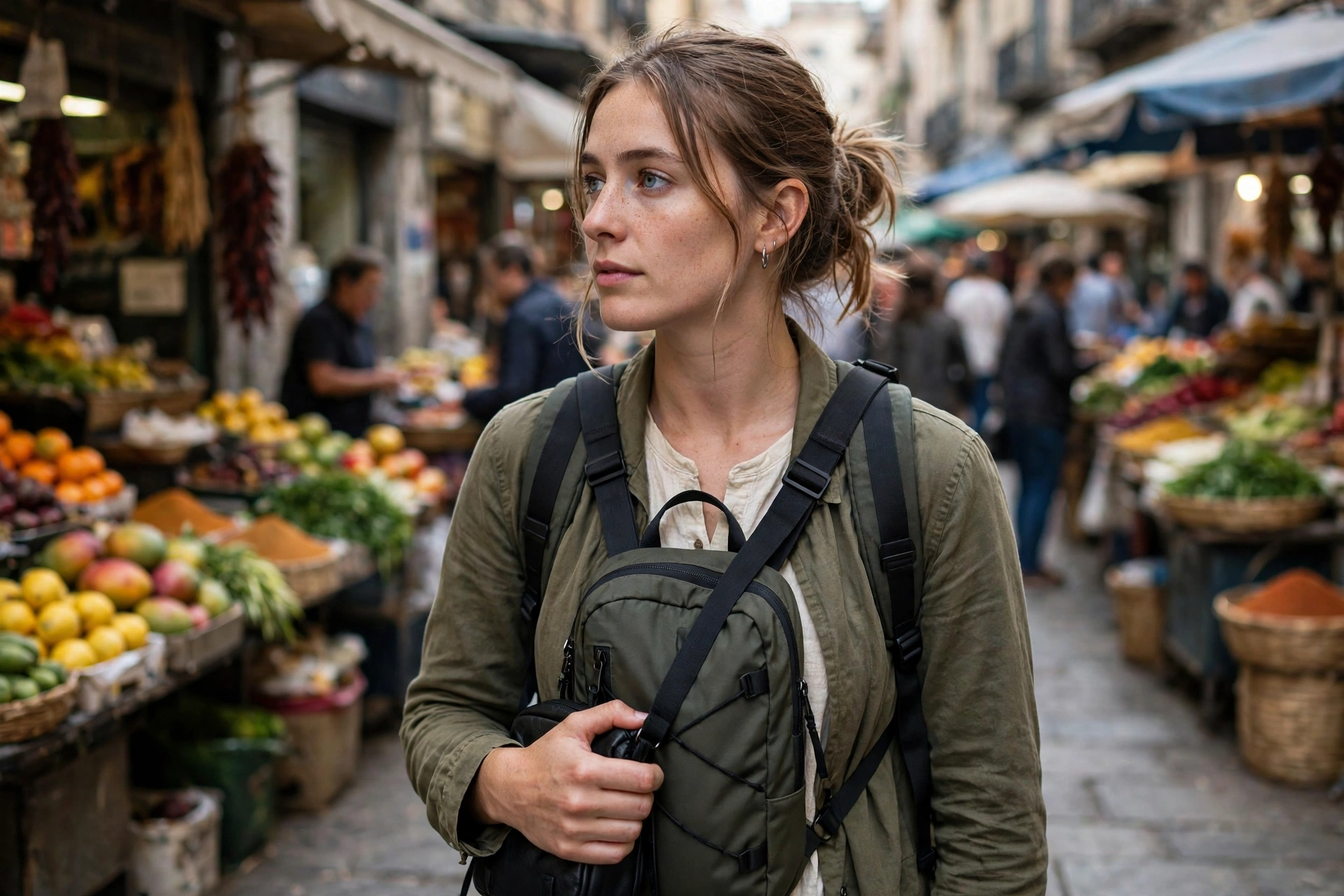
Backpackers carry everything they own, often in plain sight, and they look distracted — checking maps, reading signs, dragging luggage through unfamiliar streets. That combination attracts pickpockets and bag snatchers in busy stations, markets, and tourist areas. Most theft is opportunistic: thieves go for the easiest bag or the open pocket, so making yourself a slightly harder target is usually enough.
The Golden Rule: Split Everything
Never keep all your valuables in one place: one theft can then end your trip. Instead, spread the risk:
- Carry your day’s cash in a wallet, and keep an emergency reserve — some cash and a backup card — hidden somewhere else, such as a money belt or a zipped inner pocket of your main pack.
- Keep your passport separate from your cash when you can. If your passport is in your money belt, your spending cash should be in your pocket, not the same pouch.
- Store digital copies of your passport, visa, insurance, and booking confirmations in your email or a secure cloud folder, so you can reach them from any device if the originals are lost.
Splitting your valuables costs nothing and takes seconds each morning — and turns a bad day into an inconvenience instead of a disaster.
Choose Gear That Works Against Thieves
A few sensible choices make a real difference:
- A money belt or hidden pouch: worn under your clothes, it holds your passport, backup card, and emergency cash. Use it for storage, not for paying — pulling it out in public defeats the purpose.
- A daypack with lockable zips: small padlocks or carabiners through the zip pulls slow down a quick hand in a crowd. Keep the zipped side against your body in busy places.
- Your own padlock: many hostels provide lockers but not locks, so pack a small combination lock. It is light, cheap, and useful in hostels, buses, and trains.
- A slash-resistant or sturdy daypack: packs made from tough, cut-resistant fabric are harder to slash open from behind. A basic sturdy pack with the zips facing you works well too.
Pack Like Your Bag Could Disappear
Before you leave each morning, ask yourself: if this bag vanished, what would I lose? Your passport, phone, cards, and medication should travel on your body or in the bag you never let go of — never in checked luggage, a bus hold, or a bag left at your feet on a train. Keep the most valuable items in the hardest-to-reach compartments. If you want a refresher on travelling light and organised, these tips for packing a carry-on for a week-long trip apply just as well to a backpack: fewer, better-chosen items are easier to keep track of — and easier to keep safe.
A decoy wallet is another old backpacker trick: keep a cheap wallet with a little cash and a few expired cards in the obvious pocket, so if someone demands your wallet, that is the one you hand over.
Stay Safe in Hostels and Shared Rooms
Hostels are social, affordable, and usually safe — but a shared dorm means strangers have access to your bed area. Use the locker every time you leave the room, even for a quick shower, and lock it with your own padlock. Valuables like your passport, laptop, and camera belong in the locker or on your person, never loose on the bed or in an unlocked bag.
Never leave your phone charging unattended in a common area, and be careful with the “safe” at reception — ask how it works before handing anything over, and keep a photo of what you deposited.
Crowds, Markets and Public Transport
Most backpacking theft happens in crowds, where a hand in your bag is hard to notice. In busy markets, stations, and on packed buses, wear your daypack on your front, with the zips against your chest. Keep your phone and wallet in front pockets or an inner jacket pocket, never in a back pocket or an open tote. When you sit down in a café or restaurant, loop a bag strap around your chair leg or keep the bag between your feet where you can feel it.
Understanding the dynamics of safety while backpacking extends beyond just protecting physical items; it also encompasses safeguarding your financial resources during your travels. Currency exchange can often become a point of vulnerability if not approached thoughtfully. With the right strategies, you can minimize risks associated with handling money abroad. For instance, using bank ATMs and opting for no-fee cards can enhance your security while ensuring you get the most favorable rates. It’s crucial to be informed about the best way to exchange currency when traveling abroad, as this knowledge not only helps you save money but also reduces the likelihood of drawing unwanted attention to your valuables. As you navigate new environments, combining smart currency practices with effective security measures will empower you to travel with confidence.
Stay alert when boarding and leaving transport — count your phone, wallet, and passport before you walk away from a seat. Pickpockets and distraction tricks are a common part of travelling, so it also helps to know how to avoid tourist scams in a new city before you arrive somewhere new.
Cash, Cards and Documents
How you handle money matters as much as where you carry it. Take out cash in daylight inside a bank or a busy shop rather than at a lonely street ATM at night, and put most of it away before you leave the machine. Keep a second card from a different bank or account hidden separately from your main wallet, so a single theft does not leave you with no way to pay.
For documents, carry a photocopy of your passport when you go out and leave the original locked away, unless local rules or a border crossing require the real thing. If your passport is lost or stolen, contact your embassy or consulate as soon as you can — many can issue an emergency travel document, and having a digital copy speeds the process up. For US citizens, the State Department’s guidance on lost or stolen passports abroad explains the steps; travellers of other nationalities should check their own government’s travel site before departure.
Phones, Cameras and Tech
Your phone is your map, camera, ticket wallet, and bank — losing it hurts more than losing cash. Set a strong passcode and turn on your phone’s find-my-device feature before you travel, and back up photos and important data regularly so a stolen phone does not mean lost memories. Avoid holding your phone out in busy streets for long, and keep expensive cameras in your bag until you are ready to shoot.
If Something Is Stolen Anyway
Even careful travellers get unlucky sometimes. If it happens, act fast:
- Block your cards immediately through your banking app or by phone, and change passwords for email and banking from another device.
- Report the theft to the local police and get a written report — your travel insurance will usually ask for one.
- Contact your embassy if your passport is gone, and your insurer to start a claim.
- Use your digital copies and emergency reserve to keep moving until replacements arrive.
It is upsetting, but it does not have to end the trip — most travellers recover, replace what was lost, and carry on.
FAQs
Do I really need a money belt?
Not necessarily, but you do need somewhere hidden and on your body for your passport, backup card, and emergency cash. A money belt is the simplest option, but a zipped inner pocket or a hidden pouch works the same way. The point is the habit, not the product.
Is it safe to leave valuables in a hostel locker?
Yes — as long as you use a locker with your own padlock and actually lock it. The risk comes from leaving things unlocked in a shared room. If a hostel has no lockers, keep valuables on you or ask reception about storage.
What should I do first if my passport is stolen?
First, block any cards that were taken with it. Then report the theft to the police and contact your embassy or consulate for an emergency travel document. A digital copy will make the process faster, so keep one stored securely online before you travel.
Final Thoughts
Keeping your valuables safe while backpacking comes down to three simple habits: split everything, keep the important things on your body, and stay alert in crowds. You do not need to be paranoid — just a little harder to steal from than the next person. Do those three things, and you can spend your trip enjoying the journey instead of worrying about your bag.